Special Intensive Revision (SIR): Safeguarding the Integrity of India’s Electoral Roll

India’s democracy rests on one fundamental pillar — free and fair elections. At the heart of this system lies the electoral roll. To maintain its purity and accuracy, the Election Commission of India (ECI) conducts periodic exercises known as Special Intensive Revision (SIR).
This blog explores the history of SIR, its constitutional mandate, the role of the ECI, its significance, and the recent controversies surrounding it.
1. Historical Background of Special Intensive Revision (SIR)
The concept of revising electoral rolls is not new. Since the first general elections in 1951–52, the ECI has periodically updated voter lists to ensure accuracy.
Electoral rolls are revised in three ways:
- Annual Summary Revision – Conducted every year before qualifying dates (usually 1st January).
- Continuous Updation – Ongoing addition and deletion of names.
- Special Intensive Revision (SIR) – A more rigorous, door-to-door verification process.
SIR is generally conducted when:
- Large-scale inaccuracies are suspected.
- There has been migration or demographic change.
- A long gap exists since the last intensive revision.
- Electoral reforms require verification.
Historically, SIRs have been conducted before major elections to eliminate:
- Duplicate entries
- Bogus voters
- Deceased persons
- Incorrect addresses
Thus, SIR has evolved as a corrective and cleansing mechanism within India’s electoral system.
2. Constitutional Mandate Behind SIR
The authority of the ECI to conduct revisions flows directly from the Constitution of India.
Article 324
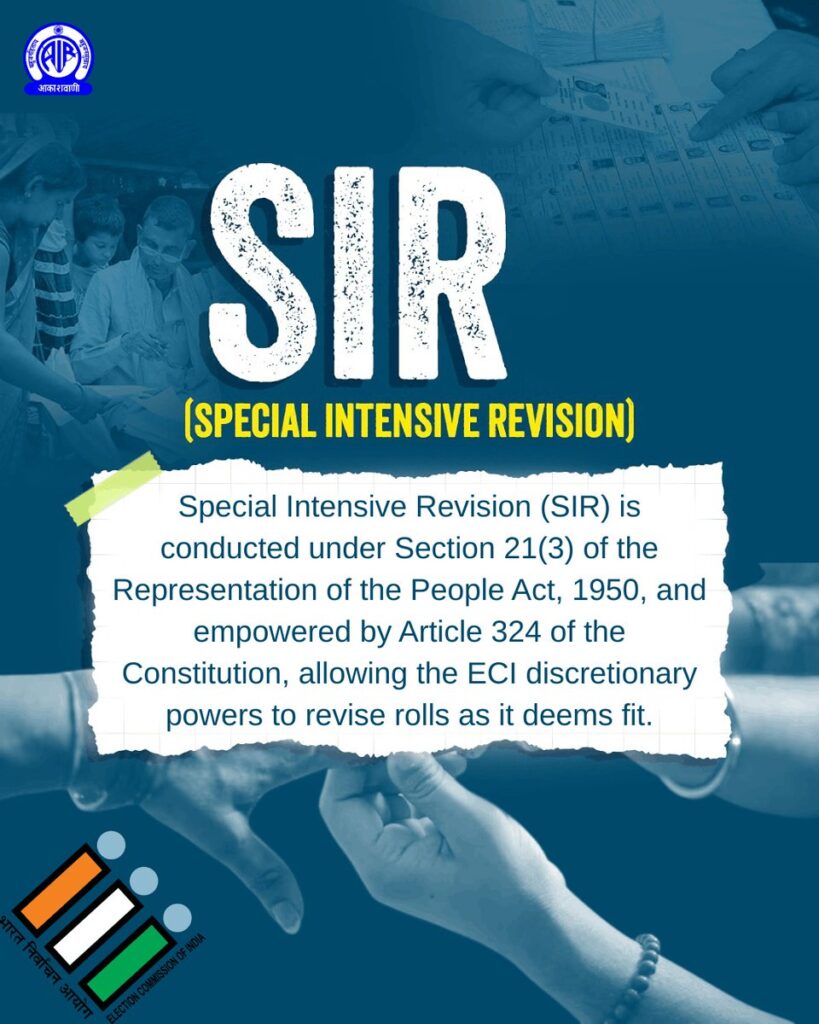
Constitution of India under Article 324 vests the “superintendence, direction and control” of elections in the ECI.
This gives the Commission wide powers to:
- Prepare electoral rolls
- Supervise elections to Parliament and State Legislatures
- Ensure free and fair elections
Additionally, the Representation of the People Act, 1950 provides statutory backing for:
- Preparation and revision of electoral rolls
- Inclusion and deletion of names
- Correction of entries
Thus, SIR is not an arbitrary administrative action — it is rooted in constitutional and statutory authority.
3. Role of the Election Commission of India (ECI)
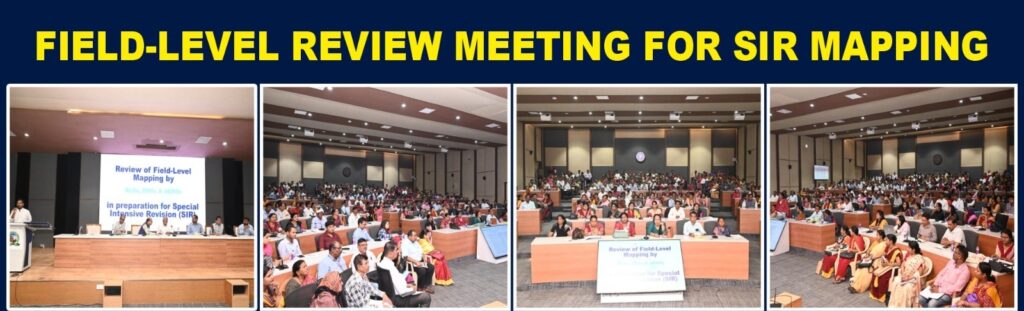
The Election Commission of India performs multiple functions during SIR:
1. Planning and Notification
The Commission announces the schedule and guidelines for revision.
2. Appointment of Officials
- Electoral Registration Officers (EROs)
- Booth Level Officers (BLOs)
3. Field Verification
Door-to-door verification of voters’ details.
4. Claims and Objections Process
Citizens can:
- Apply for inclusion
- Seek correction
- Object to wrongful entries
5. Transparency Measures
Draft electoral rolls are published for public scrutiny.
Through SIR, the ECI ensures:
- Universal adult suffrage
- Equality of vote
- Electoral credibility
4. Significance of Special Intensive Revision (SIR)
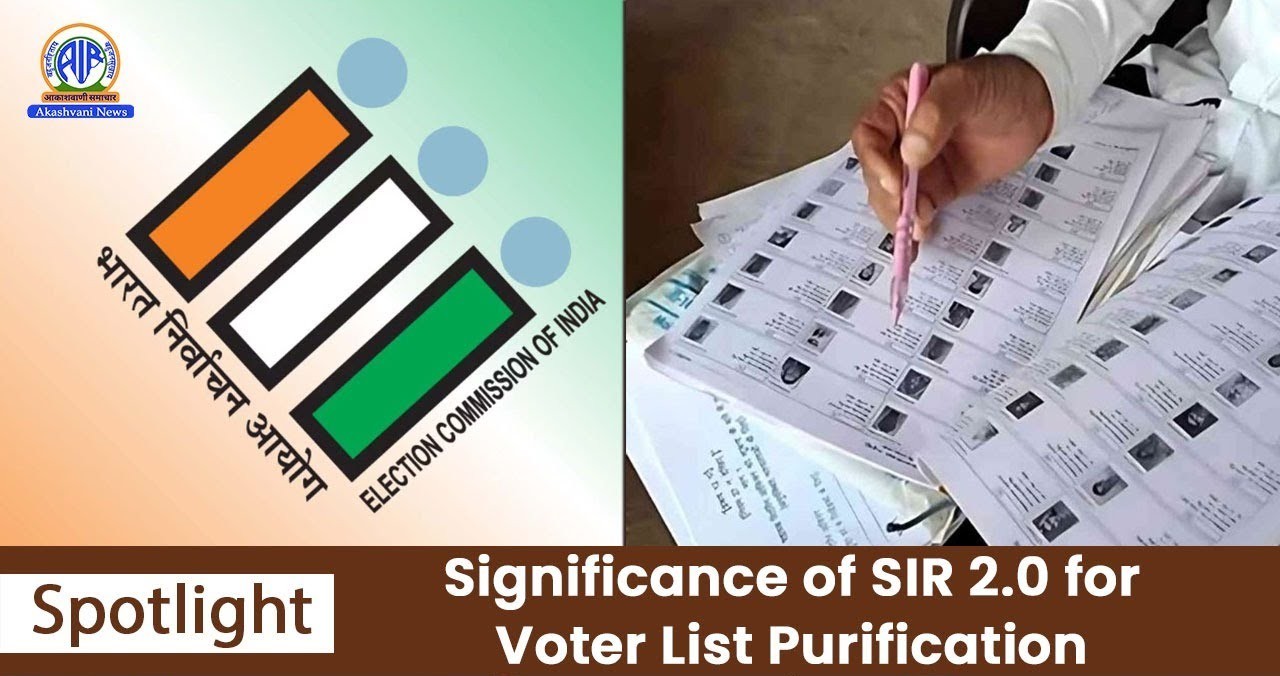
1. Purification of Electoral Rolls
Eliminates duplicate, shifted, and deceased voters.
2. Strengthening Democracy
Accurate rolls prevent impersonation and bogus voting.
3. Enhancing Voter Confidence
Transparent verification builds public trust.
4. Inclusion of New Voters
Ensures eligible citizens (18+) are added promptly.
5. Preventing Electoral Malpractice
Reduces scope for manipulation and electoral fraud.
In essence, SIR is a democratic hygiene exercise — cleaning the voter list to preserve the sanctity of elections.
5. Recent Controversies Around SIR
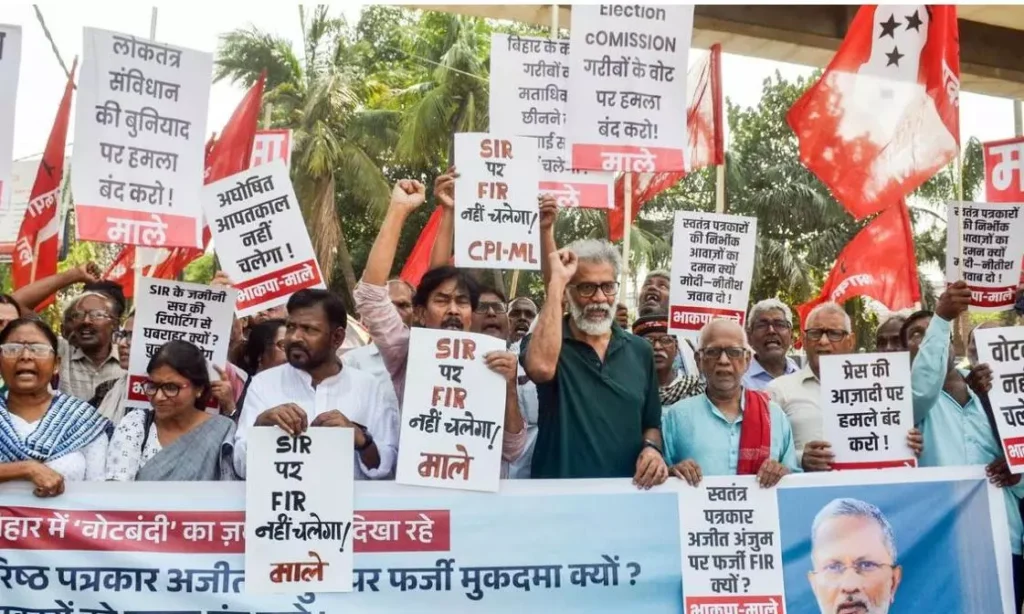
Despite its importance, SIR has often been surrounded by debate and criticism.
1. Allegations of Mass Deletions
Opposition parties in several states have alleged:
- Targeted deletion of names
- Disproportionate impact on minorities or migrant communities
2. Timing Before Elections
When SIR is conducted close to elections, political parties sometimes question:
- Neutrality of timing
- Administrative fairness
3. Documentation Requirements
Concerns arise regarding:
- Excessive documentation demands
- Exclusion of economically weaker sections
4. Transparency and Data Accuracy
Some critics argue:
- Lack of clarity in deletion criteria
- Inadequate communication to affected voters
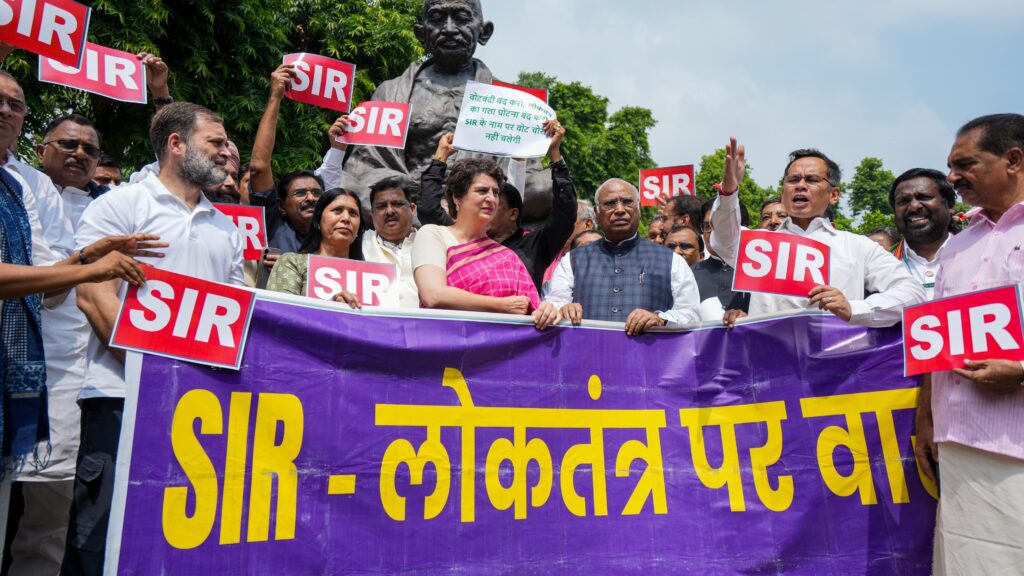
However, the ECI maintains that:
- Deletions follow due process
- Notices are issued
- Opportunity for appeal is provided
The Commission has repeatedly emphasized its commitment to neutrality and transparency.
6. Balancing Integrity and Inclusion
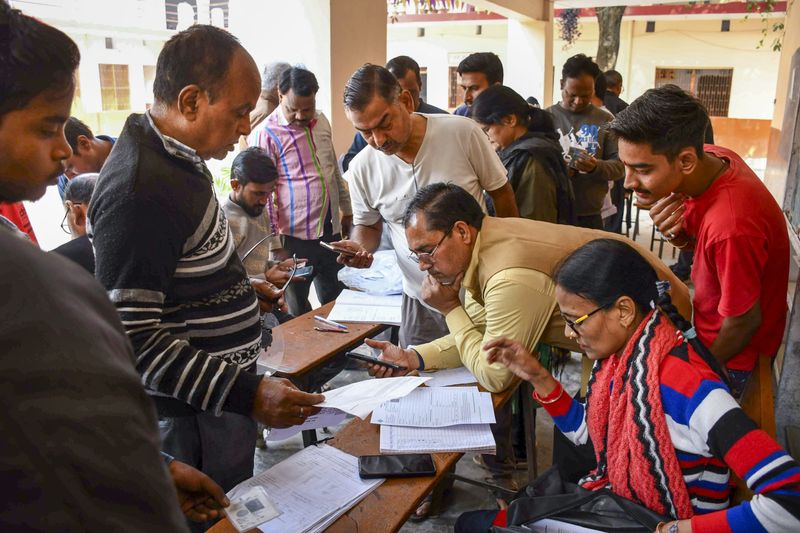
The real challenge in SIR is maintaining a balance between:
- Integrity of the electoral roll
- Inclusiveness of democracy
Overzealous deletion can disenfranchise voters.
Over-permissive inclusion can allow bogus voting.
Hence, SIR must operate with:
- Procedural fairness
- Adequate notice
- Accessible grievance redressal
- Transparency
SIR: Odisha Story
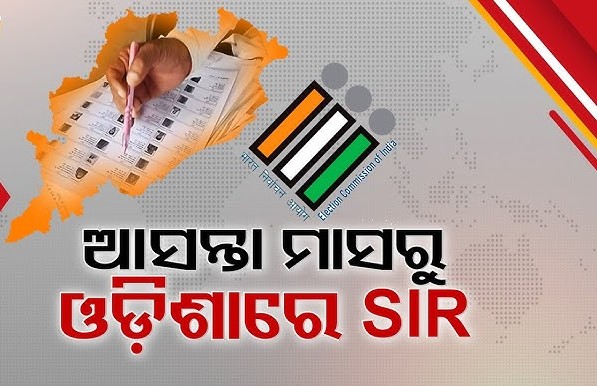
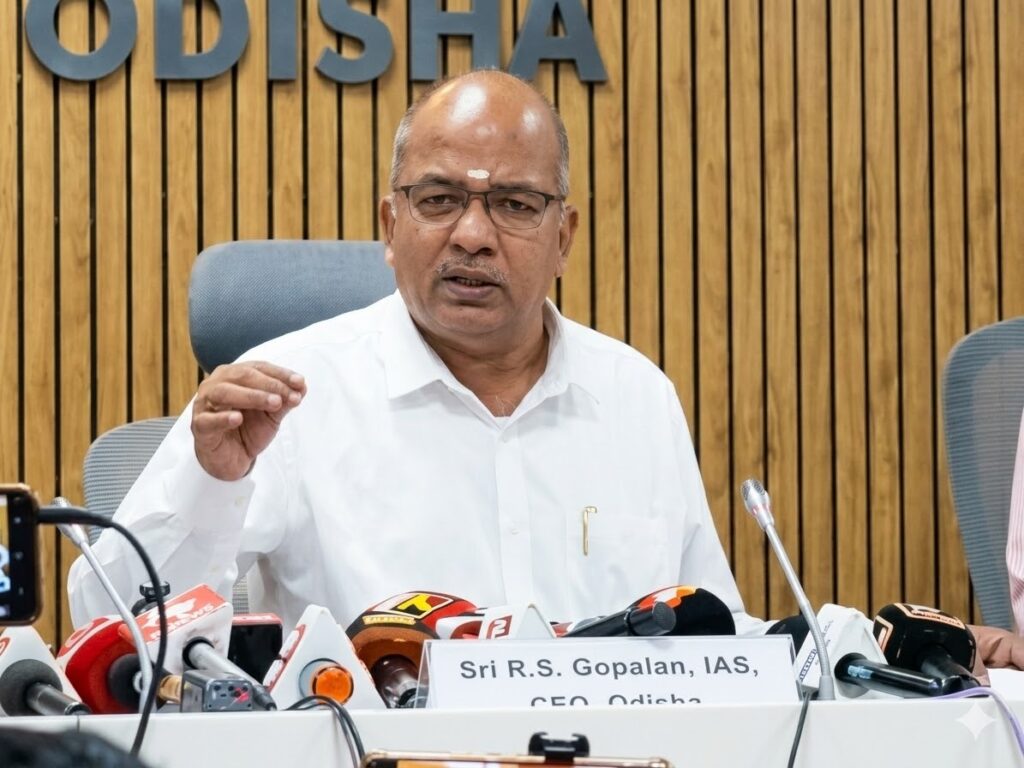
Recently the Election Commission of India, announced that SIR to be conducted across 16 states and 3 UTs including Odisha. During SIR Phase-III , Booth Level Officers will go house-to-house to 3.34 crore electors assisted by 27723 lakh Booth Level Agents appointed by political parties during the Enumeration Phase.
In Odisha, The SIR will be conducted as detailed below
| Date or Time Period | Work Schedule |
| 20th May 2026 to 29th May 2026 | Preparatory Phase (Administrative) |
| 30th May 2026 to 28th June 2026 | Household Survey by BLOs |
| 05th July 2026 | Draft Electoral roll to be published |
| 05th July 2026 to 04th August 2026 | Claims and Objection |
| 05th July 2026 to 02nd September, 2026 | Settlement of Claims and Objections |
| 6th September, 2026 | Final Publication of Electoral Roll |
Here the Qualifying Date is 01/07/2026. i.e means any one who is completing 18 years as on 01.07.2026, shall be entered into the electoral roll. (Form 6 for new elector registration)
What it meant for a Common People
- Keep your documents ready like: Land Records/Caste Certificates/Birth Certificates/School certificates etc as desired by ECI along with Aadhar and Voter ID
- Here a Citizen has to Prove his Citizenship.
Conclusion
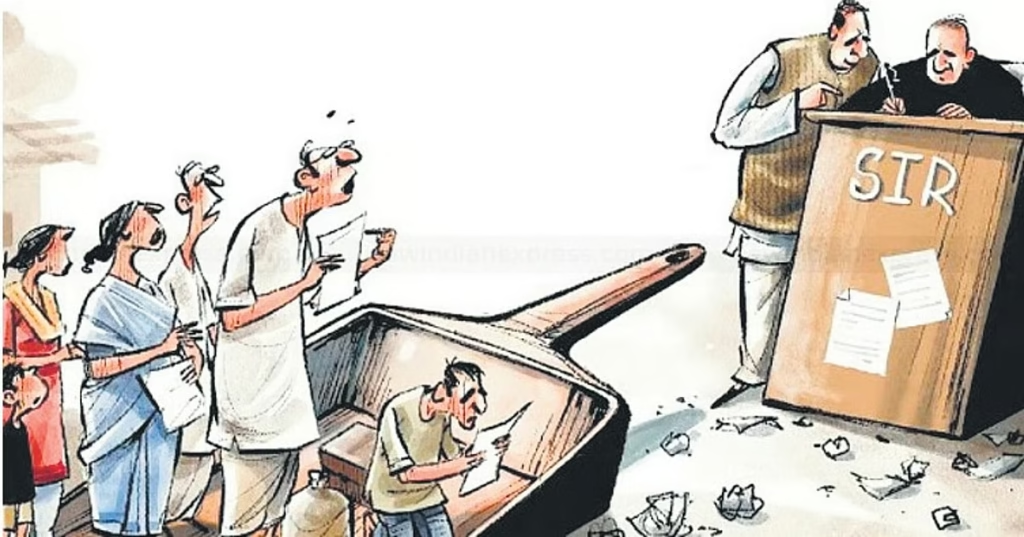
The Special Intensive Revision (SIR) is a constitutionally backed mechanism designed to protect the integrity of India’s electoral democracy. Rooted in Article 324 of the Constitution of India and supported by statutory law, it empowers the Election Commission of India to ensure clean, updated, and credible voter rolls.
While controversies and political debates may surround its implementation, the broader objective remains clear — to preserve the sanctity of the vote.
In a country as vast and diverse as India, electoral accuracy is not merely administrative — it is foundational to democratic legitimacy.
SIR, when implemented transparently and fairly, strengthens democracy by ensuring that every genuine voter counts — and only genuine voters count.

Graduated from Utkal University and worked with Government of India for more than 12 years as Development Officer (Department of Posts), wherein dealt with financial literacy & financial inclusion and mainstreaming of marginalized section of the society. Later got selected to Odisha Civil Services, 2021 and allotted Odisha Labour Service Cadre and now working under Labour Directorate, Odisha and posted in Nayagarh District of Odisha. Wherein dealing with enforcement of Labour Laws, Conciliation of Industrial and wage related disputes , monitoring the welfare of the working class, promoting healthy industrial relation etc.
View All Articles
Nice article sir, keep posted
Thank you.